Burlington, VT · Garage Door Service
Roller Replacement for Essex Junction's 1980s-Built Doors
Essex Junction's housing dates to 1982, when steel rollers on steel track were standard. We explain what fails, what we stock, and how a roller swap runs from Burlington.
- Repairs & new doors
- Springs & openers
- Serving 5 nearby communities
Doing It Yourself
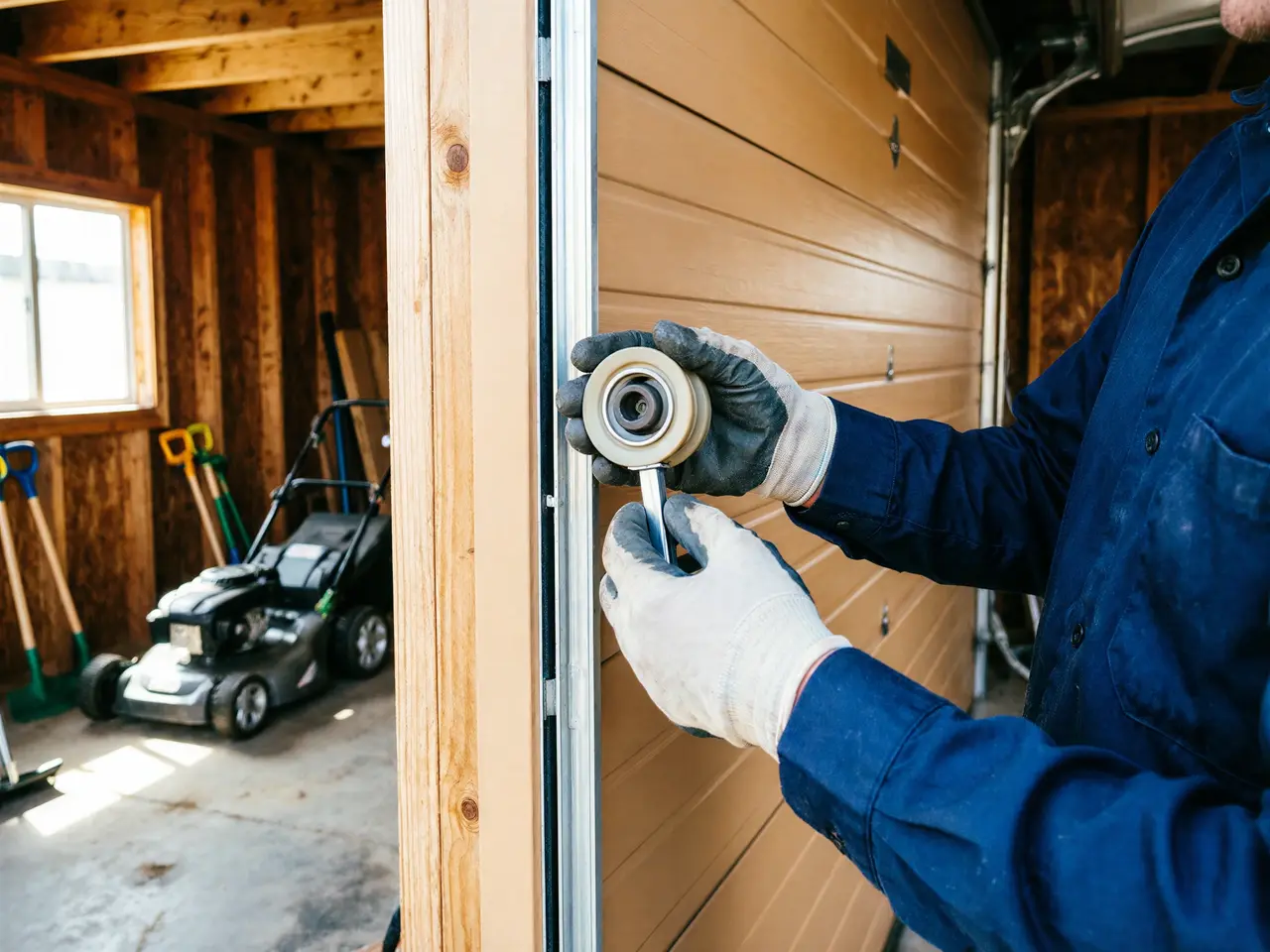
If your door is dragging or hopping in the track, you can pull the bottom roller and look at it yourself before calling anyone. On a house from the early 1980s, that roller is probably the original steel wheel on a steel stem, not a nylon roller on a sealed bearing. Steel rollers wear a flat spot over the decades, and once that happens the wheel doesn't turn smoothly in the track anymore - it skips and grinds instead.
What you shouldn't do yourself: the top two rollers on either side of a door with torsion springs. Those sit close to the spring assembly, and the stems can be under enough tension from a slightly bent track that they're not a safe DIY pull. We've seen people get a finger pinched trying to force a roller back into a track that's already bent out of true.
If you're comfortable with a ladder and a socket wrench, the bottom two rollers on a standard door are a reasonable weekend job. Everything above that, especially on a double door with four cables and two springs working together, is where we'd rather you call than guess.
Booking a Visit
We run this job out of Burlington, and Essex Junction is about 6 miles down the road - close enough that a roller swap doesn't turn into a half-day trip. There's no satellite shop or drop point in Essex Junction itself; every truck that works on a door here starts from Burlington, so when you call, you're booking a visit, not a walk-in.
Give us the make of your opener if you have it, and tell us whether the door is sticking at one spot in the track or binding the whole way up. That alone usually tells us whether we're looking at a roller problem or something further up the chain - a bent track, a loose hinge, or a spring that's lost tension and is letting the door ride crooked. We'd rather ask two questions on the phone than show up with the wrong parts.
How Long It Takes
A standard roller replacement on a single door, once we're on site, is a short job - most of the time goes into pulling the old hardware off and making sure the new rollers seat square in the track, not fighting the track itself. Doubles with four rollers on each side take longer, and if the track has bent from years of riding on a flat-spotted wheel, straightening or replacing a section adds real time to the visit.
The variable isn't the roller - it's what the roller did to the track on its way out. A steel roller that's worn unevenly for a few years can walk the door off-center and chew a groove into the track rail. We won't know how much of that there is until we're standing in front of it, which is part of why we look at the whole track, not just the wheel, before we tell you what the job actually involves.
What Causes It Around Here
Essex Junction sits in a severe-cold climate band, same as the rest of the Burlington service area, and cold is hard on rollers in a specific way: grease thickens, steel contracts slightly, and a roller that was already worn starts binding instead of turning. That's why roller trouble tends to show up in late fall and winter here even though the wear built up all year.
The other driver is age of the housing stock itself. With a median build year around 1982 for Essex Junction, a lot of these doors are running hardware that's close to original or a mid-life replacement from the 1990s or early 2000s - steel rollers on steel track, sized for the openers and spring setups common at the time. Those parts weren't built to be swapped easily for modern nylon rollers without also checking the track gauge, which is part of what we look at on a visit rather than just handing over a generic roller kit.
The Symptom
The clearest sign is sound: a grinding or rhythmic clicking as the door travels, instead of a smooth roll. If you stand at the bottom of the door and watch the rollers as someone runs the opener, a bad one will visibly hop or catch at the same point in the track every time - that's the flat spot on the wheel passing through.
A second sign is the door riding unevenly, dipping slightly on one side as it travels, which usually means the rollers on that side are more worn than the other. On a house built around the early 1980s in this area, we see this pair up often with hinges that have loosened over the same decades, since the original hardware sets were never meant to outlast 40 winters of use. If you're only hearing noise with no visible hop or dip, it's worth a look before it gets to the point where the track itself takes damage.
Stocked Parts
We carry nylon rollers with sealed ball bearings in the sizes that fit most doors from the 1980s through today, which is what we put in when we replace steel rollers - they run quieter and don't develop the flat-spot wear that steel does. For households in Essex Junction still running original 1980s-era steel-on-steel hardware, that's usually a straightforward swap.
One honest limit: if your track gauge or roller stem size is a less common match - which happens more often on older or custom doors than on standard builder-grade ones - we may not have that exact part on the truck, and the job becomes an order-and-return-visit instead of a one-trip fix. We'd rather tell you that up front than pretend every stem fits every roller we carry.
Frequently asked questions
Do steel rollers from the 1980s wear out faster than newer nylon ones?
Yes, generally. Steel rollers develop a flat spot where they contact the track, and once that happens they get louder and rougher every month. Nylon rollers on sealed bearings last longer and run quieter, which is why we replace steel with nylon on most jobs unless there's a reason to match the original hardware.
Why does my door get noisier in winter?
Cold thickens the grease in the roller bearing and makes steel slightly less forgiving, so a roller that was already worn tends to bind or click more in winter than in summer. The wear itself usually built up over the warmer months - winter just makes it obvious.
Is there a Burlington Garage Door Pros shop in Essex Junction?
No. We're based in Burlington and drive out to Essex Junction for every visit, about 6 miles each way. There's no local depot here, so booking a visit means scheduling a truck from Burlington rather than a walk-in appointment.
Can a bad roller damage the track itself?
Yes, if it's left long enough. A flat-spotted roller riding unevenly can groove or bend the track rail over time, which turns a simple roller swap into a track repair or replacement as well. Catching the noise early keeps it a one-part job.
More garage door services in Essex Junction
Book garage door service in Burlington
Call now or request a quote - tell us what the door is doing and where you are.