Burlington, VT · Garage Door Service
What Burlington's Older Housing Stock Means for Your Garage Door
Burlington homes date mostly to 1938-1992, with original garage door hardware not built for Vermont's cold. Here's what wears first and when to call now.
- Repairs & new doors
- Springs & openers
- Serving 5 nearby communities
When to Call Someone
Most houses in this service area went up between 1938 and 1992, with the median landing around 1983, so a lot of what's on the track and the header is original equipment from that build era. That matters because a torsion spring from a 1983 build doesn't match what's on the shelf at a big-box store, and a door that's sagging on one side or slamming the last foot of travel is usually telling you the lift system is near the end of its life, not that it needs a tune-up.
Call someone when the door reverses on its own partway down, when you hear a loud bang from the spring area, or when the opener strains and groans before it moves the door at all. Those are mechanical failures, not cosmetic ones, and waiting on them usually turns a $200 spring job into a cable, drum, or track replacement.
Here's the honest part: if the drum or spring size on an older door is obsolete, matching it exactly isn't always possible, and the straighter path is often a full spring and hardware swap rather than chasing an exact replica part.
How Local Conditions Play In
Burlington sits in a climate band rated cold-severe, which means steel torsion springs here cycle through far wider temperature swings than springs in a mild-winter market. Cold steel loses tension faster, and grease that was fine in August turns thick in January, which is why doors that worked all summer suddenly feel heavy or slow once the real cold sets in.
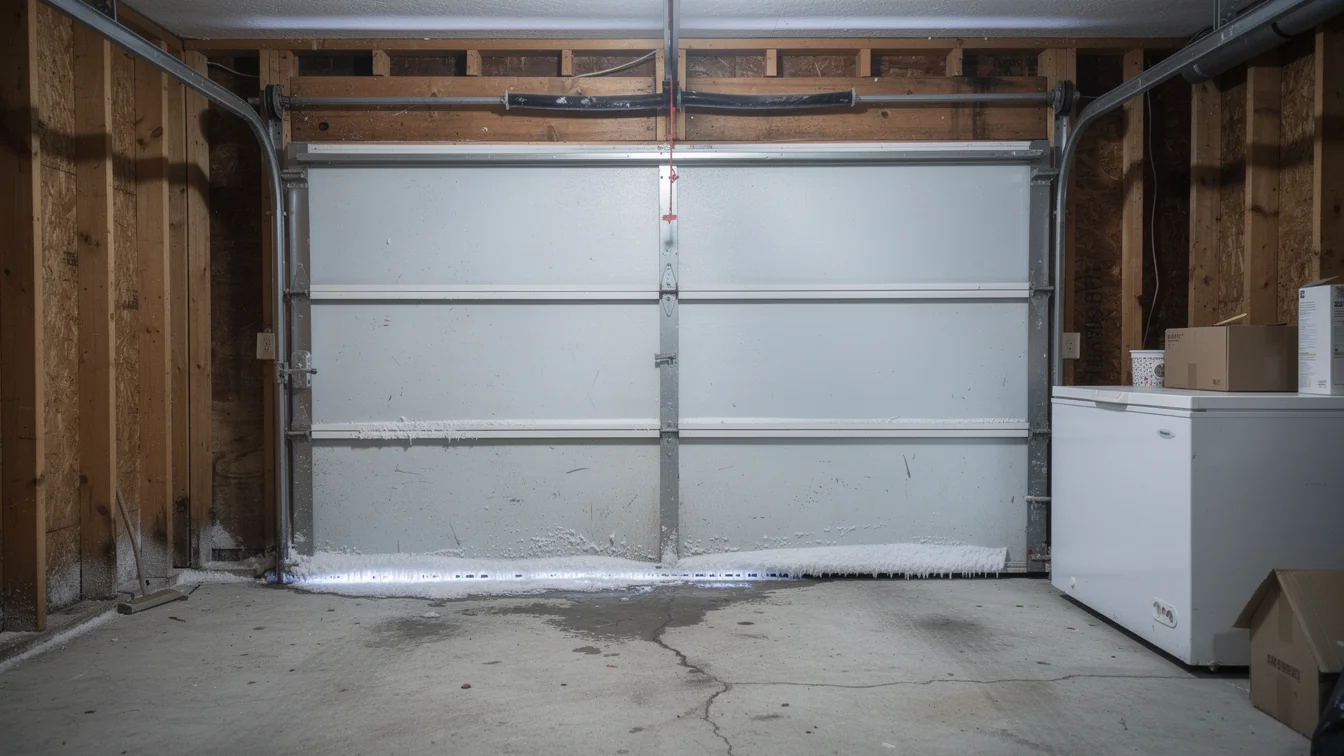
Most of the housing stock in this area was built in the 1980s and 90s, per the local record, and a lot of those garages were framed with the insulation standards of that decade - not today's. That means a wider gap between the door and the jamb, more cold air finding its way around the panel edges, and condensation on the inside of steel doors that can rust out the bottom panel section over the years.
Owner-occupied houses here number close to 19,500 across the area, and a good share of them are carrying the original door and opener combination from that build window. None of this is dramatic on its own, but it adds up to hardware that's working harder, in colder conditions, than the spec sheet assumed.
What Changes With the Season
In a cold-severe climate band like this one, the swing from a mild fall afternoon to a hard winter morning is the thing that actually breaks parts. Metal contracts, the torsion spring's working tension shifts, and a door that closed smoothly in October can start binding or jumping the track once overnight lows settle in for the season.
Rollers are usually the first thing to complain. Nylon rollers stiffen in the cold and can crack at the edges if they're older stock, while steel rollers without sealed bearings start to squeal. On doors from the 1938-1992 building wave that are still running their original rollers and hinges, this is often the first sign something's about to go.
Opener chains and belts also tighten up in the cold, and a chain that's slightly loose in summer can start skipping teeth on the sprocket once temperatures drop. None of these failures happen overnight - they build across a season, which is exactly why a door that was fine in September can need a service call by January without anything dramatic ever having happened to it.
What Is Going On
Put together, the picture here is straightforward: a housing stock that's mostly 1980s and 90s construction, spread across 19 named areas of the region, sitting inside a climate band rated cold-severe. Those two facts explain almost every service call this market generates - original hardware, aged by decades of hard winters, finally giving out.
With roughly 46,225 households in the service area and a median income near $97,708, most owners here are in a position to choose replacement over a patchwork repair when the math favors it, rather than being stuck nursing a door along. That's worth knowing before a spring breaks at 7am on a workday - it's a decision point, not just an emergency.
The service area runs close in: Winooski three miles out, Colchester at four, South Burlington at five, Essex Junction at six, with Shelburne, Williston, and Essex a bit further. All of them share the same housing-age pattern and the same winters, so what wears out on a door in one of these towns is, almost without exception, the same thing wearing out a few miles away.
Frequently asked questions
Why does my garage door get harder to open every winter?
Cold steel loses some of its spring tension, and grease on the track and rollers thickens in low temperatures. In a cold-severe climate band like this one, that effect is more pronounced than in a milder market, and it's worse on original hardware from a house built decades ago that was never serviced for winter load.
Is it worth repairing a door from a house built in the 1980s?
Often yes, especially if the track and opener mounting are still sound - springs and rollers are standard-size items in most cases. But if the drum, spring size, or opener are genuinely obsolete, a full hardware replacement usually ends up being the more durable and cost-effective call than chasing exact-match parts.
Why did my door suddenly start making noise this winter?
Seasonal temperature swings are the usual cause. Rollers stiffen, chains tighten, and tension in the torsion spring shifts as the cold sets in, so a door that ran quietly all summer can start squealing or binding once overnight lows drop, particularly on older rollers and hinges.
Related garage door services in Burlington
More garage door guides
Book garage door service in Burlington
Call now or request a quote - tell us what the door is doing and where you are.