Burlington, VT · Garage Door Service
When the Power Goes Out: Openers in Burlington's Older Homes
Burlington's housing dates mostly to 1938-1992, and the climate here is cold and severe. That mix means openers fail at the worst times. Here's what actually matters.
- Repairs & new doors
- Springs & openers
- Serving 5 nearby communities
When to Call Someone
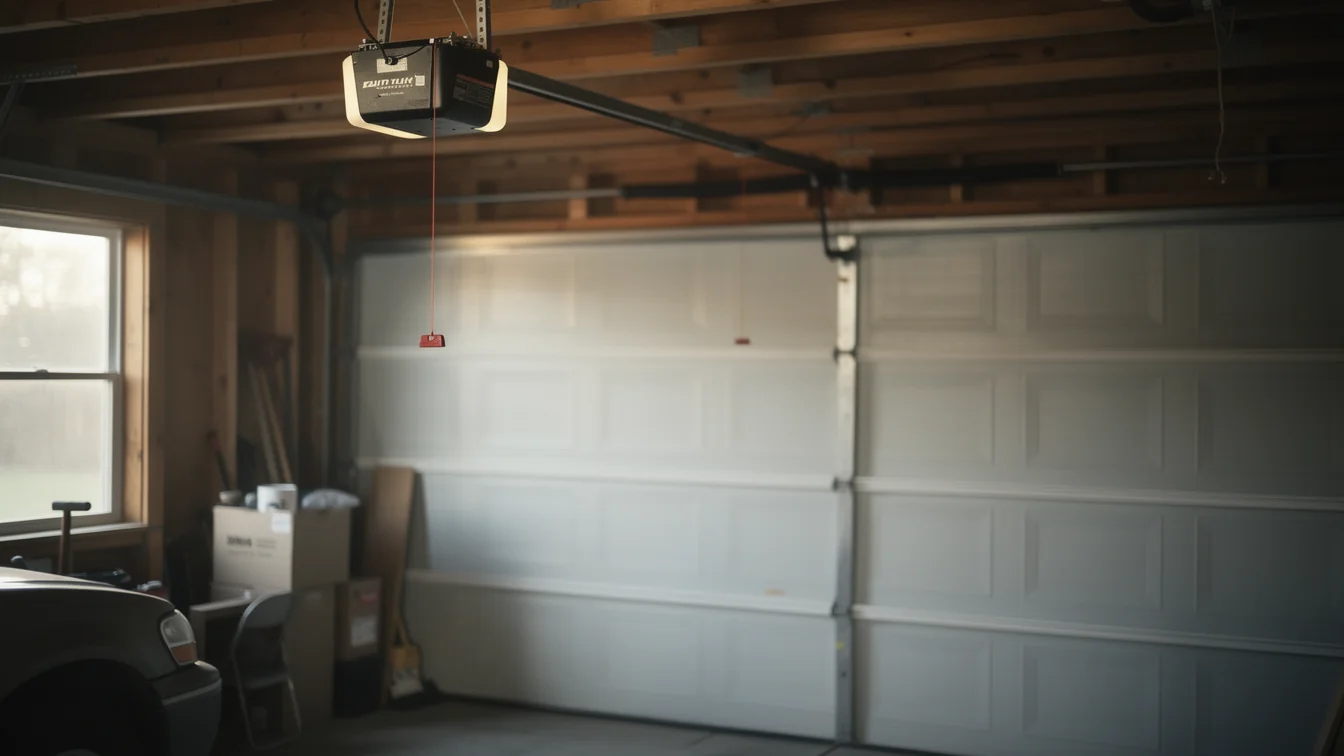
If your opener hums but the door doesn't move, or the door reverses before it closes, that's usually a limit switch or a sensor knocked out of alignment, not something to leave alone through a cold snap. Call when the opener runs on battery backup but the door won't budge manually, since that often means a spring problem underneath an electrical one, and forcing it can bend track. Also call if you smell anything burning near the unit or hear a grinding sound on cold mornings. With housing stock here running 1938-1992 (median build year 1983, per F1), a lot of openers are original chain-drive units that were never built with today's battery backup standard in mind. If yours still has a pull-cord release and no battery box, that's worth a look before the next outage, not during one. One thing we don't do: rewire your home electrical panel. If the breaker feeding the garage keeps tripping, that's an electrician's call, not ours.
How Local Conditions Play In
Burlington sits in a cold, severe climate band, and that matters more for openers than most people expect. Cold doesn't just stiffen springs and thicken grease in the track rollers - it also strains the opener's circuit board and motor capacitor, especially in units installed before battery backup was standard equipment. Add in the area's winter power interruptions, and you get the common failure pattern here: the door is mechanically fine, but the opener has no power and no backup, so it's stuck shut or stuck open. Homes across the 19 named areas in this service territory built mostly in the 1980s and 90s often have openers original to the house or one replacement cycle in, meaning the backup battery, if there is one, is near the end of its working life. We see this most on older chain-drive units that draw more current at startup than newer belt-drive models, which makes them the first to stall when voltage dips rather than cuts out cleanly.
What Changes With the Season
Late fall through late winter is when opener calls spike here, tied directly to the cold-severe climate classification and the age of the housing stock. Cold makes grease in the opener's drive gear thicken, which increases load on the motor right when ice has also added weight to the door itself. If the unit doesn't have battery backup, a winter outage leaves the door wherever it was when the power dropped - sometimes open, which is its own problem in a hard freeze. We also see a second bump in spring, when thawing and refreezing cycles loosen mounting hardware that was fine all winter under a steady load. Houses built in the 1983 median era often have openers mounted to framing that has shifted slightly over four decades, and the seasonal freeze-thaw is what finally shows it.
What Is Going On
Across this part of Vermont - Burlington, with Winooski 3 miles off and Colchester, South Burlington, Essex Junction, and the other named areas within roughly a dozen miles - the opener problem is really two problems stacked on each other: an aging fleet of units installed when houses here were mostly built (median 1983, per F1), and a climate that stresses both the mechanical and electrical sides of that equipment every winter. Household income in the service area runs a median of $97,708, and across roughly 46,225 households with about 19,487 owner-occupied houses, a fair number of garages still run the opener that came with the house. None of this means every opener needs replacing. A lot of chain-drive units from the 1980s and 90s still run fine with a fresh gear kit and a sensor realignment. But if yours has no battery backup and you've had more than one dead-opener morning this winter, that's the sign worth acting on before the next cold stretch, not after it.
Frequently asked questions
Why does my opener fail specifically in cold weather here?
Burlington's climate is classed cold and severe, which thickens the grease in the opener's drive gear and strains the motor's startup draw right as winter power interruptions become more common. Older units without battery backup simply lose power and stop wherever the door was, rather than failing gracefully.
Is my opener old enough to need battery backup added?
If your house falls in the common 1938-1992 build range for this area and the opener looks original or close to it, it likely predates battery backup as a standard feature. Check for a battery compartment near the motor unit - no compartment usually means no backup.
Do newer belt-drive openers handle the cold better than chain-drive?
Generally yes, since belt-drive units tend to draw less current at startup, which matters when voltage dips during winter outages instead of cutting cleanly. That said, we haven't tested every model against every outage pattern, so this is a general mechanical point, not a guarantee for your specific unit.
Should I replace the opener or just the battery?
If the motor and gears run fine and the only issue is no backup power, a battery add-on is usually enough. If the unit is original to a 1980s-era house and already shows strain in cold weather beyond just backup power, replacement is often the more sensible call.
Related garage door services in Burlington
More garage door guides
Book garage door service in Burlington
Call now or request a quote - tell us what the door is doing and where you are.