Burlington, VT · Garage Door Service
Roller Replacement for Williston's Early-90s Garage Doors
Williston's garages mostly went up around 1992, a decade newer than the area median. Here's what that means for worn or frozen rollers and what the fix looks like.
- Repairs & new doors
- Springs & openers
- Serving 5 nearby communities
Doing It Yourself
Most houses in Williston went up around 1992, a full decade after the service area's overall median of 1983. That later build date usually means a steel roller door on a factory-set torsion system rather than the older extension-spring hardware you'd find on a house from the 1960s. If your door is grinding, hopping on the track, or one side is louder than the other, it's worth a look before you call anyone.
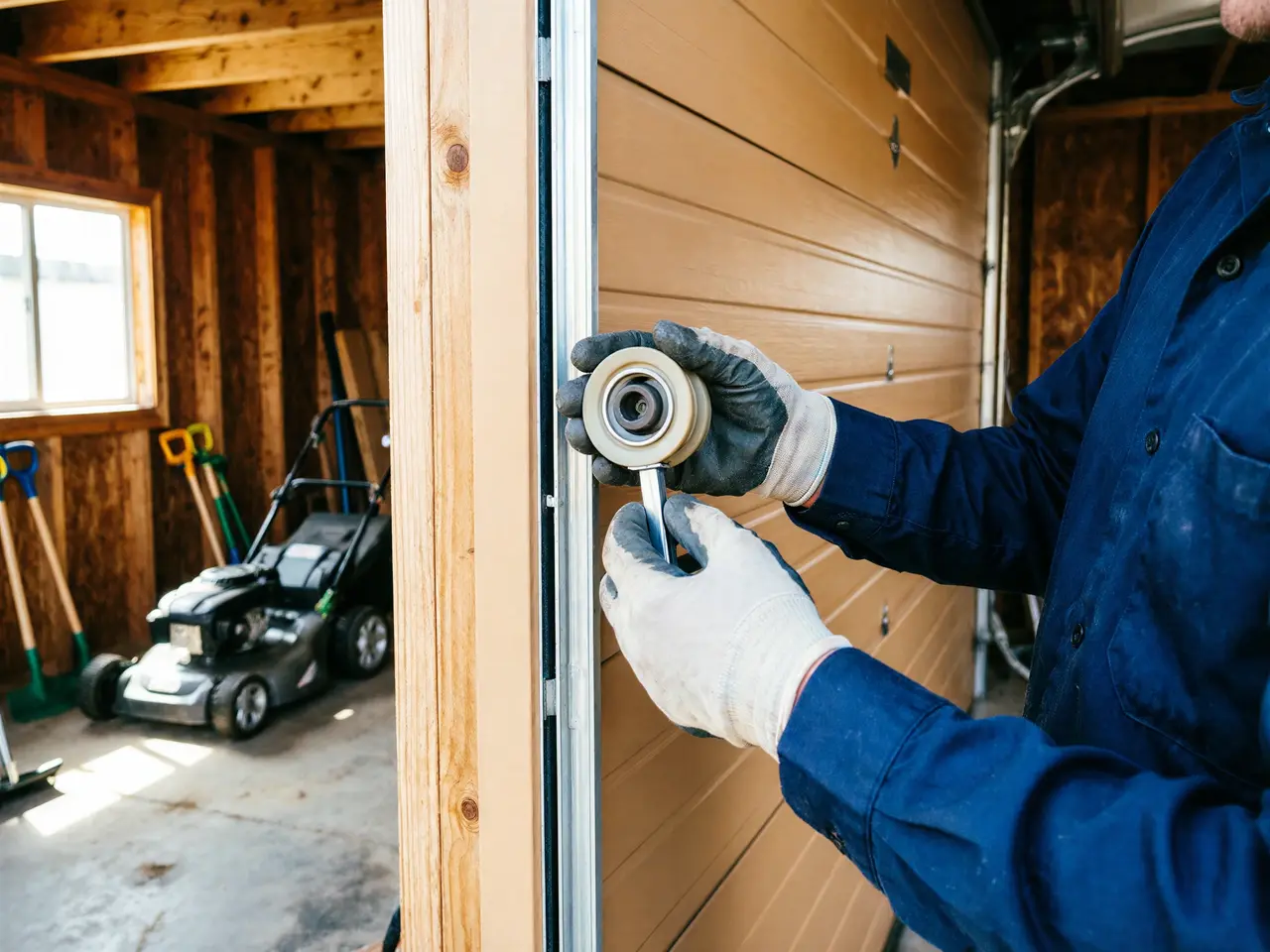
Pop the garage light on and watch the rollers as the door travels. A roller that's flat-sided, chipped, or rusted at the stem is the usual culprit. You can tighten a loose hinge bolt yourself with a nut driver, and you can vacuum out the track grooves where grit and old grease have caked up. What you should not do is pull a roller out of a loaded track - the door is under spring tension even when it looks still, and a stem that lets go under that tension can take a finger with it. If you're not sure whether what you're seeing is a worn roller or a bent track, that's the point to stop and call, not the point to start swapping parts.
We'll say plainly: this isn't a repair where DIY saves you much. Rollers are cheap parts and the labor is in the alignment after, not the part itself.
What the Fix Involves
On an early-90s door, we're usually pulling steel rollers that came without sealed bearings - standard for that era's builder-grade hardware - and swapping in sealed-bearing steel or nylon rollers depending on what the track clearance allows. The old stems often come out pitted or slightly bent from years of side-load, which tells us whether the track itself needs re-setting at the same time or just a clean and realign.
Vermont's winters matter here more than people expect. In severe cold, unsealed rollers lose their lubrication faster and start to bind right when the door's cold-stiff anyway - that double load is what turns a slow roller into a door that won't lift at all on a January morning. We check both tracks for flare at the bottom section, since that's where a stiff roller tends to walk the door off-center over a few winters.
We replace all the rollers on a run, not just the failed one - a mismatched set on one track wears unevenly and you're back to the same job in a year. If a spring is also showing fatigue while we're in there, we'll tell you, but roller work and spring work are priced and scheduled separately.
Booking a Visit
We run out of Burlington, about 8 miles from Williston, so this isn't a job with a local branch or a truck already parked nearby - it's a scheduled visit we route out to you. That's worth knowing up front: we're not claiming a response time for Williston specifically, and we won't invent one.
When you call, tell us the door's age if you know it, whether it's one roller or the whole set acting up, and whether the door still opens on the opener or you're lifting it by hand. That lets us bring the right roller stock - steel versus nylon, standard stem versus short stem - instead of guessing on-site and making a second trip.
We book by the job, not by the neighborhood, so there's no minimum call-out tied to being in Williston versus anywhere else we cover.
What You Pay
Roller replacement pricing comes down to how many rollers need swapping, whether the track needs realignment at the same time, and which roller type we're installing - nylon runs quieter but costs more than steel, and not every track clearance takes nylon without modification. We don't have a flat number to quote here without seeing the door, so we won't make one up.
What we can tell you is what drives the number up: a bent track section, a door that's been running on mismatched or missing rollers for a while, or an opener that's been fighting a stiff door and needs a check afterward. None of that is unusual on a door pushing thirty years old, which is where a fair share of Williston's stock now sits.
If the rollers are the symptom of a door that's otherwise failing - bent panels, a spring near the end of its cycle count - we'll say so rather than replace rollers on a door you're going to be calling us about again in six months.
Frequently asked questions
How old does a door have to be before rollers start going bad?
There's no fixed age, but doors from Williston's main building years - early 1990s - are now old enough that original rollers, especially unsealed steel ones, are past their working life. Fifteen to twenty years of regular cycling plus winter stiffening is a common point for failure.
Can I just replace one roller instead of the whole set?
You can, but we don't recommend it. Rollers on the same track wear at close to the same rate, and leaving old, worn rollers next to a new one creates uneven drag that shortens the new one's life and can throw the door off-track.
Do you carry rollers on the truck or do you need to order parts?
Common roller sizes are usually on hand. If your door needs a less common stem length or a nylon roller for a tight track clearance, that may mean a short lead time before the second visit - we'll tell you on the call if that applies.
Will a roller fix stop the door from being noisy in winter?
Often, yes - a lot of winter noise in this climate is unsealed rollers stiffening in the cold rather than a track or opener problem. But if the noise is a deep thud rather than a squeal, that's more likely a spring or hinge issue we'd check separately.
More garage door services in Williston
Book garage door service in Burlington
Call now or request a quote - tell us what the door is doing and where you are.