Burlington, VT · Garage Door Service
Why a Garage Door Goes Off Track Here
Burlington's 1938-1992 housing stock and severe cold winters put real strain on garage door tracks. Here's what actually knocks a door loose and when to call.
- Repairs & new doors
- Springs & openers
- Serving 5 nearby communities
When to Call Someone
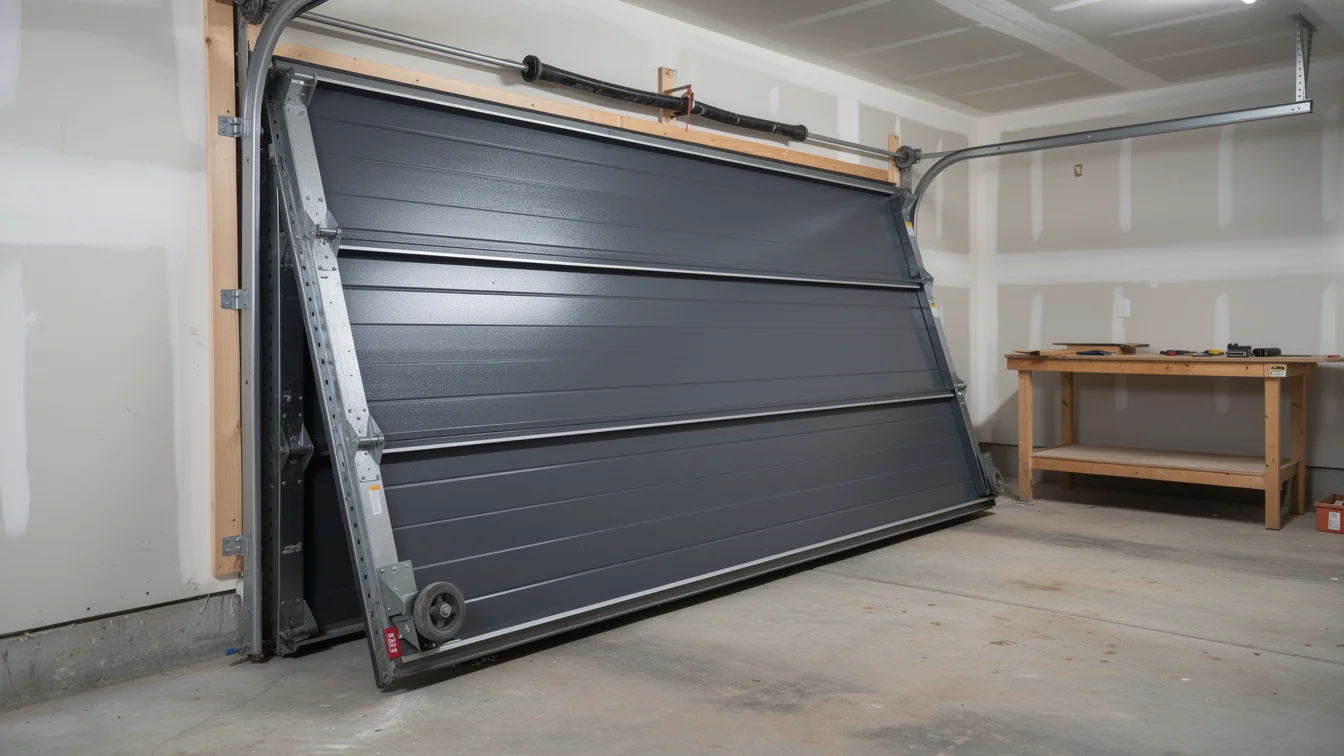
If the door is hanging crooked, if one side dips lower than the other, or if you hear a grinding scrape instead of a smooth roll, stop using the opener and call. Running a door that's already off track bends the track further and can pull the bracket clean off the framing. That's a bigger repair than a bent track alone.
A door that's merely noisy but tracking straight is a different problem - usually rollers, not alignment. But in a lot of the housing around Burlington, built mostly between 1938 and 1992 with a median year of 1983, the track brackets were set with hardware sized for that era's lighter steel doors. If a heavier replacement door went in later without upgrading the track gauge, the margin for error is thin. A door that's been fine for years can go off track after one hard slam from wind or a car bumping it, because the bracket was already working near its limit.
We don't straighten a track that's been bent twice already. At that point the metal has fatigued and it'll walk again within a season. Replacing the track section costs less than a second service call six months out, and we'll say so instead of rebending it.
How Local Conditions Play In
Burlington sits in a severe cold climate band, and that matters more for tracks than people expect. Steel track contracts in deep cold, and the mounting bolts - especially original ones on houses from the 1938-1992 build era - can work loose a fraction of a millimeter at a time as the metal shrinks and expands across a Vermont winter. You don't notice it happening. You notice the door suddenly riding rough in February.
Across the 19 named areas in this service territory, the housing is consistent enough that this isn't a one-off issue: most of the stock here dates to the 1980s-90s, and track hardware from that period is a known quantity to anyone who's worked on it a while. The brackets are usually lag-bolted into jamb framing that's also seen four decades of seasonal movement, which loosens the whole assembly from the wall side, not just at the roller.
Cold also stiffens the nylon or composite rollers some doors use, making them grab instead of glide at the curve where the track bends from vertical to horizontal - the exact spot where a door jumps track most often. None of this is unique to one house. It's a pattern tied to the climate and the age of the building stock here, and it's why track problems cluster in winter.
What Changes With the Season
In the warm months, a slightly loose bracket or a worn roller might just make noise. In a Vermont winter, the same slack becomes the difference between a door that rolls true and one that jumps the track on the first cold morning. Grease that was fine in October can gum up by January and change how the roller sits in the channel.
Homes built in the 1983 median era for this area often have single-car or narrow double tracks that flex more under cold-stiffened springs, which changes the angle the door meets the track at the bottom. That's a mechanical issue, not a cosmetic one, and it shows up as the door leaning hard to one side as it opens, right before it pops free.
We see more track calls in the first real cold snap and again in the spring thaw, when frozen ground shifts a slab edge just enough to tip the floor the door tracks are leveled against. Neither is dramatic on its own. Together, over a winter, they're what walks a bracket loose.
What Is Going On
Most of the time a door goes off track for one of three reasons: a bent track rail from an impact, a bracket that's worked loose from seasonal metal movement, or a roller that's worn enough to ride up over the lip of the channel instead of inside it. All three show up more in this area because of what's already discussed - older bracket hardware from the 1938-1992 build era, a severe cold climate that stresses steel and mounting bolts every winter, and in some cases a slab or jamb that's shifted slightly over forty-plus years.
It's rarely one dramatic cause. It's usually small wear stacking up until one cold morning the door finally jumps. That's also why a quick DIY fix - pushing the door back onto the rail by hand - almost never holds. If the bracket or rail is the real problem, it'll come off again within days, often worse the second time because the metal's already stressed.
We can't tell you the fix without seeing the track and the bracket in person. A phone description tells us whether to bring a bracket kit or a full rail section, not which one you actually need.
Frequently asked questions
Why does my garage door only go off track in winter?
Steel track and mounting bolts contract in the cold, and homes here sit in a severe cold climate band. A bracket that's slightly loose in summer can let the track shift just enough in deep cold for the roller to jump the rail, especially on houses with original hardware from the 1938-1992 build era.
Can I just push the door back onto the track myself?
You can, but if a bent rail or loose bracket caused it, pushing it back rarely holds. The underlying problem is still there, and the door usually jumps again within days, often with more damage to the track or roller the second time.
Is a bent track always a full replacement?
No - if it's bent once and the bracket is sound, we can often straighten and re-secure it. If a section has been bent and re-straightened before, the metal's fatigued and we'll replace that section instead, since it'll likely bend again.
Does the age of my house matter for this kind of repair?
It does. Most houses in this area were built between 1938 and 1992, with a lot of that stock from the 1980s and 90s. Track brackets from that era are sized for the doors of the time, so a heavier replacement door installed later can strain original hardware.
Related garage door services in Burlington
More garage door guides
Book garage door service in Burlington
Call now or request a quote - tell us what the door is doing and where you are.